
Together with ANMAT (National Administration of Drugs, Food and Medical Technology) and the Argentine Pharmacopoeia, the initiative seeks to incorporate the zebrafish model into official protocols. This aims to reduce the use of mammals in experiments.
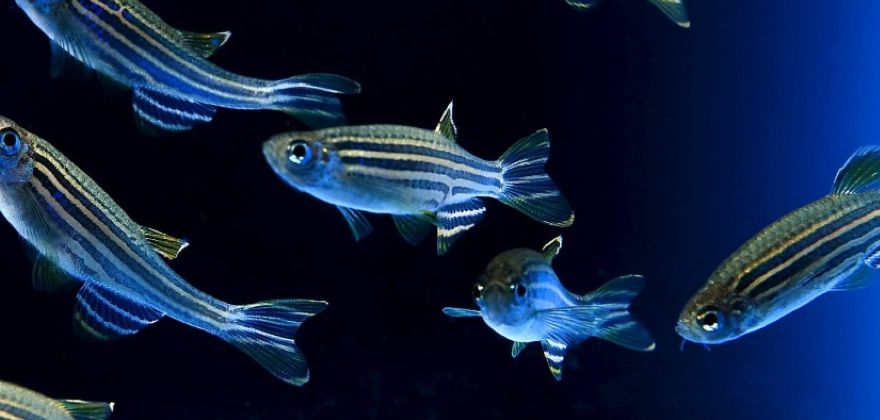
Drug developments driven by universities and companies must be evaluated to determine their safety, primarily through toxicity analysis. Animals play a central role in most of these studies. However, many members of the scientific community are seeking to reduce or replace their use. Along these lines, the National University of Quilmes (UNQ) is part of a working group focused on promoting the zebrafish model as a tool for toxicity assessment. This approach, an alternative to the use of rodents, is presented as a promising option in which Argentina seeks to position itself as a leader in the region. UNQ has an aquarium that houses the Zebratox platform , which specializes in the zebrafish model and was approved by the National Administration of Drugs, Food and Medical Technology (ANMAT) in 2024.
The director of the aquarium, scientist Jimena Prieto , speaks with the UNQ Scientific News Agency about the relevance of this working group, which also includes the participation of ANMAT and the Argentine Pharmacopoeia: an official technical body that establishes the standards for the preparation, analysis and control of pharmaceutical products, in order to guarantee their safety and efficacy.
“At the national level, this initiative positions Argentina as a pioneer in Latin America in incorporating alternative methods to the use of animals in toxicological studies . ANMAT provides the legal framework , while the Argentine Pharmacopoeia establishes the protocol framework . This is the first approved alternative method for toxicological evaluation without the use of animals . These tests use zebrafish embryos , which, because they are used during their first hours of development, are not considered complete organisms and, moreover, do not belong to the mammal group ,” explains the specialist.
In 2024, ANMAT (the Argentine National Administration of Drugs, Food and Medical Technology) approved the methodology implemented by the Zebratox platform at the aquarium of the National University of Quilmes. This methodology consists of toxicological studies performed on zebrafish embryos, making this aquarium the first facility approved by the regulatory body for this type of research. “From the University aquarium, we contributed to the development of the procedure for toxicological studies on zebrafish embryos,” explains Prieto, adding that the working group is of fundamental importance, since “it will allow these methods to be incorporated into the Argentine Pharmacopoeia as the official reference protocol for toxicological studies throughout the country .”
This initiative also positions UNQ as an expert in alternative methods, particularly with the zebrafish model . “We went from having the first and only aquarium in the country approved by ANMAT to being at a working group incorporating these methods so that they can be used nationwide in companies and other universities,” Prieto explains.
The benefits of including these protocols in the Pharmacopoeia are that both companies and universities wishing to determine environmental, water, or soil toxicity can do so using alternative methods. Beyond avoiding the use of mammals in these types of tests, the advantages lie in shorter timeframes and lower costs. “It’s a matter of ethics, but also of economics,” the expert summarizes.
Prieto also explains that the working group formed by ANMAT, the Pharmacopoeia, and UNQ will convene other experts to evaluate the guidelines. Later, it will be opened to the public to gather and incorporate perspectives from various forums. “ The idea is to start with zebrafish embryos, but the goal is also to move forward with other models to gradually reduce the use of mammals ,” she notes.
* This news was originally published by Nadia Chiaramoni in the UNQ Science News Agency .